
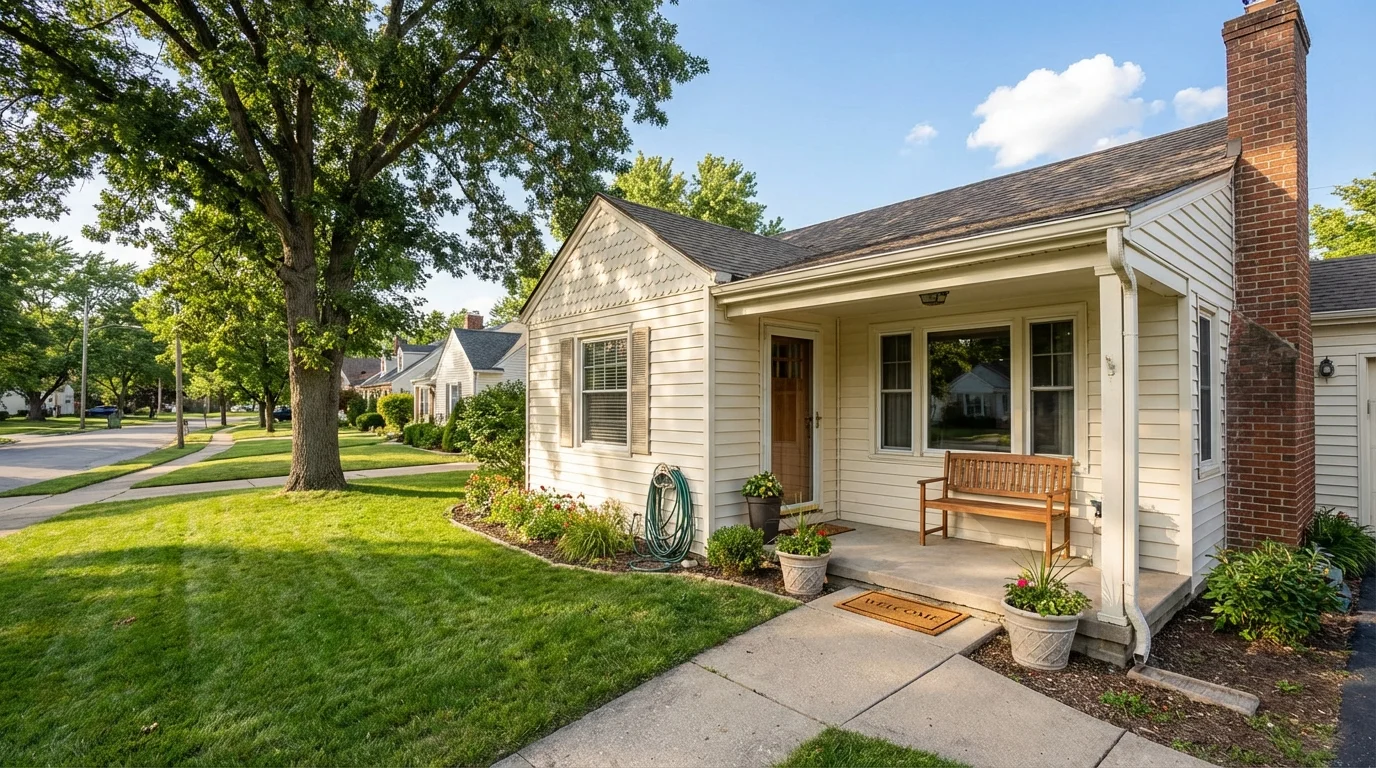
Your home is likely your largest financial asset, and home insurance is the safety net protecting it. Yet most homeowners could not explain what their policy actually covers — or more importantly, what it does not cover. This knowledge gap becomes painfully expensive when disaster strikes and a claim is denied.
This guide explains home insurance in plain English: what is covered, what is excluded, how much you need, and practical ways to lower your premium without sacrificing protection.
What Home Insurance Covers
A standard homeowners policy (HO-3) includes six types of coverage. Understanding each one is essential for ensuring you have adequate protection.
Dwelling Coverage (Coverage A)
Covers the physical structure of your home — walls, roof, floors, built-in appliances, attached garage, and permanently installed fixtures. If your home is damaged or destroyed by a covered peril, dwelling coverage pays to repair or rebuild it.
How much you need: Enough to rebuild your home from the ground up at current construction costs. This is NOT your home’s market value or purchase price — it is the construction cost. Get a replacement cost estimate from your insurer or a local contractor.
Common mistake: Insuring for your home’s market value instead of replacement cost. Market value includes land (which does not need insurance) and may not reflect actual construction costs. In some markets, replacement cost exceeds market value.
Other Structures Coverage (Coverage B)
Covers structures on your property that are not attached to your home — detached garage, shed, fence, pool, guest house, and gazebo.
Typical limit: 10% of your dwelling coverage. If your dwelling is insured for $300,000, other structures coverage is $30,000.
Personal Property Coverage (Coverage C)
Covers your belongings — furniture, electronics, clothing, appliances, and other personal items — if damaged, destroyed, or stolen.
Typical limit: 50-70% of dwelling coverage. For a $300,000 dwelling, that is $150,000-210,000 in personal property coverage.
Important distinction:
- Actual cash value (ACV): Pays replacement cost minus depreciation. Your 5-year-old laptop is worth far less than a new one.
- Replacement cost value (RCV): Pays to replace items with new equivalents. Costs more but provides far better protection.
Our recommendation: Always choose replacement cost coverage for personal property. The premium difference is small, but the claim difference is enormous.
High-Value Item Limits
Standard policies cap coverage for certain categories:
- Jewelry: $1,000-2,500
- Cash: $200
- Electronics: $2,500-5,000
- Firearms: $2,500
- Collectibles: $1,000-2,500
If you own items exceeding these limits, add a scheduled personal property endorsement (rider) for each high-value item.
Loss of Use Coverage (Coverage D)
If your home is uninhabitable due to a covered loss, this coverage pays for temporary living expenses — hotel, rental home, restaurant meals, and other costs above your normal expenses.
Typical limit: 20-30% of dwelling coverage, or 12-24 months of expenses.
Personal Liability Coverage (Coverage E)
Covers legal liability if someone is injured on your property or if you accidentally damage someone else’s property. This includes legal defense costs, medical bills, and court-ordered settlements.
Typical limit: $100,000-300,000.
Our recommendation: Increase to at least $300,000-500,000. Liability claims can easily exceed $100,000, and increasing coverage is inexpensive — going from $100,000 to $300,000 might cost $20-30/year.
Medical Payments Coverage (Coverage F)
Covers minor medical expenses for guests injured on your property, regardless of fault. No lawsuit or liability determination required — it is designed to handle small claims quickly.
Typical limit: $1,000-5,000 per person.
What Home Insurance Does NOT Cover
These exclusions surprise many homeowners and create dangerous coverage gaps.
Flooding
Standard home insurance does not cover flood damage — even if the flooding results from a hurricane or heavy rain. Flood insurance must be purchased separately through the National Flood Insurance Program (NFIP) or private flood insurers.
Who needs it: Anyone in a FEMA-designated flood zone (required for federally backed mortgages). Also recommended for anyone within a mile of a waterway, coast, or area with poor drainage.
Cost: $700-1,500/year through NFIP, potentially less through private insurers.
Earthquakes
Earthquake damage is excluded from standard policies. Separate earthquake insurance is available and recommended in seismic zones (California, Pacific Northwest, New Madrid zone).
Normal Wear and Maintenance
Home insurance covers sudden, accidental events — not gradual deterioration. A pipe that bursts suddenly is covered. A pipe that leaks slowly over months, causing mold, is not.
Sewer and Drain Backups
Water damage from backed-up sewers or drains is typically excluded. Add a sewer backup endorsement ($40-100/year) — this is one of the most common and costly exclusions homeowners discover too late.
Home-Based Business Equipment
If you run a business from home, your standard policy may not cover business equipment, inventory, or liability from business activities. A home business endorsement or separate commercial policy fills this gap.
Certain Dog Breeds
Some insurers exclude liability claims related to specific dog breeds considered high-risk (pit bulls, Rottweilers, German Shepherds). Check your policy if you own a dog — being denied a liability claim because of your dog’s breed is an expensive surprise.
How to Save on Home Insurance
1. Bundle with Auto Insurance
Combining home and auto insurance saves 10-25% on both policies. This is the single biggest discount available and should be your first step.
2. Increase Your Deductible
Raising your deductible from $1,000 to $2,500 saves 10-20% on premiums. Only do this if you have savings to cover the higher deductible.
3. Improve Home Security
Install a monitored security system (5-15% discount), deadbolt locks (2-5%), smoke detectors (2-5%), and a fire extinguisher. Smart home devices like water leak sensors and smart smoke detectors may qualify for additional discounts.
4. Upgrade Roof and Electrical
A new roof (especially impact-resistant) can save 10-35% depending on your location and insurer. Updated electrical, plumbing, and HVAC systems reduce risk and premiums.
5. Shop Around Every 2-3 Years
Like auto insurance, home insurance rates vary significantly between companies. Shopping every 2-3 years (or after significant home improvements) ensures competitive pricing.
6. Ask About Professional and Loyalty Discounts
Many insurers offer discounts for certain professions (teachers, first responders, military), alumni associations, and long-term policyholders.
7. Maintain a Claims-Free Record
Filing small claims often raises premiums more than the claim payout. For losses close to your deductible, paying out of pocket preserves your claims-free discount.
How Much Home Insurance Do You Need?
Dwelling Coverage
Get a replacement cost estimate — the cost to rebuild your home with similar materials at current prices. Your insurer can provide this estimate, or hire an independent appraiser for accuracy.
Personal Property
Create a home inventory. Walk through each room and document major items with photos, descriptions, and approximate values. This serves double duty — it helps determine your coverage need and speeds up claims if you ever need to file.
Liability
Minimum $300,000, ideally $500,000. If your net worth exceeds $500,000, consider an umbrella policy ($1M+ coverage for $200-300/year) for additional protection.
Frequently Asked Questions
Is home insurance required? Not by law, but mortgage lenders require it as a condition of the loan. If you own your home outright, insurance is optional but strongly recommended — the financial risk of going uninsured is enormous.
Does home insurance cover my roof? Yes, but with conditions. Damage from covered perils (storms, hail, fire) is covered. Damage from age, wear, and poor maintenance is not. Some policies cover only the depreciated value of older roofs.
What happens if I underinsure my home? Most policies include a coinsurance clause — if you insure for less than 80% of replacement cost, claims are paid proportionally. Insure for $200,000 on a $300,000 replacement cost home, and claims may be reduced by 33%.
Does working from home affect my insurance? Yes, if you have clients visiting, business equipment, or inventory. Standard policies have limited coverage for business property ($2,500 typical) and may exclude business liability. Add a home business endorsement or separate commercial policy.
How fast should I file a claim after damage? Report damage to your insurer as soon as possible — most policies require “prompt” notification. Document everything with photos and video before making temporary repairs. Keep receipts for all emergency repairs.
Take Action
Review your home insurance policy today. Verify your dwelling coverage matches current replacement costs, check for common exclusions, and make sure your personal property coverage is adequate.
Ready to compare? Get free home insurance quotes from top-rated companies and see if you are overpaying for your current coverage.